
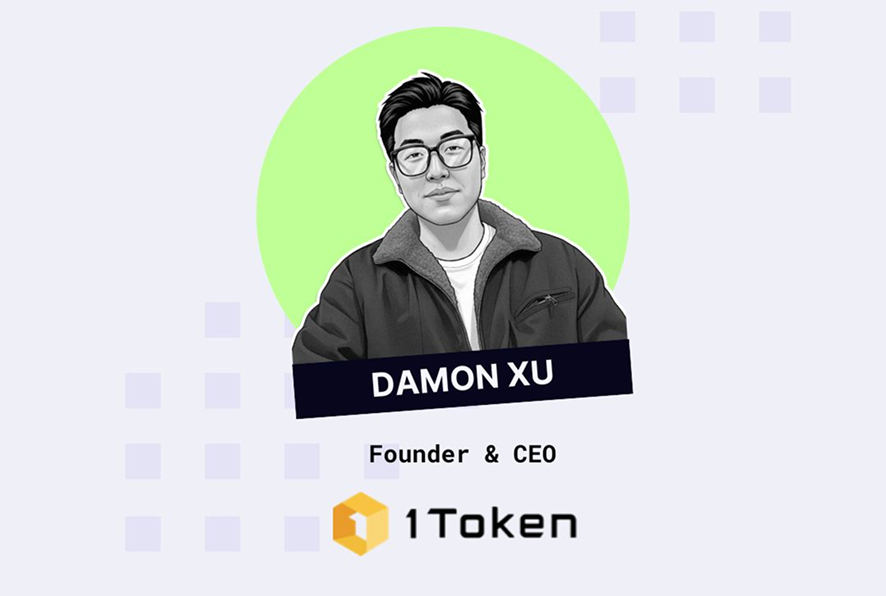
Damon Xu from 1Token on Crypto Asset Management & Fund Accounting
What We Discuss With Damon Xu
Crypto funds trade across exchanges, wallets, custodians, and DeFi protocols.
Trading may be easy but reconciling everything isn’t.
In this episode, I speak with Damon Xu, Founder & CEO of 1Token, about the infrastructure behind institutional crypto asset management.
Traditional portfolio management systems and fund administration tools weren’t built for digital assets. Crypto funds must manage fragmented data across exchanges, blockchains, and DeFi while dealing with pricing inconsistencies, complex positions, and fund-level NAV reporting.
1Token is a SOC 2 certified platform used by crypto funds and asset managers to manage portfolios, risk, and reporting across CeFi and DeFi, aggregating trades, transactions, and positions across exchanges, custody, OTC desks, wallets, and protocols while automating reconciliation, NAV, and reporting.

Shownotes
- (0:00) Coming Up
- (3:12) Damon’s quant background
- (6:13) Early crypto fund challenges
- (8:38) About 1Token
- (9:44) Crypto PMS Explained
- (15:59) Get 2 months for free with Request Finance
- (17:39) PMS for market maker v/s asset manager
- (19:29) 1Token for fund admin
- (21:47) Comparing 1Token & Paxus, Geneva
- (24:36) 1Token v/s subledger
- (26:38) DeFi data
- (29:27) Valuation & pricing sources
- (32:38) 1Token’s risk management system
- (35:49) Understanding risk curators
- (40:17) How to Choose a risk curator
- (42:27) 1Token feature for onchain vaults
- (44:34) 1Token Demo
- (50:49) Using AI in crypto funds
- (54:37) Reach out to Damon
[00:00:00] Damon: PMS is a old word. Traditional, we say PMS.
[00:00:04] Damon: Crypto, we say PMS.
[00:00:05] Damon: But overall idea is that helping Allocator, helping Portfolio Manager, Risk Manager, Accounting Team, Trader to better understanding what happened to the whole portfolio.
[00:00:18] Damon: What's the PnL, what's the risk? That's the meaning for PMS.
[00:00:22] Umar: In web2, Geneva and Paxus are well known for administration platforms, but they don't support crypto. So where does 1Token fit in?
[00:00:31] Damon: On the accounting side, I think we can divide it in two parts. One is more on the business side, which understanding what's the business that you are working on.
[00:00:40] Damon: Another side is pure accounting part. In traditional like Paxus and Geneva, they are strong, but I believe in traditional finance, they take care of the two parts together.
[00:00:50] Damon: But in crypto, they, they don't have the first part, so they definitely needs someone to take care the first part, which is someone like us.
[00:00:59] Damon: A lot of like fund administrator, they use 1Token and then connect with Paxus and also some buy-side fund, they use 1Token and then they connect with Geneva.
[00:01:08] Umar: Welcome to The Accountant Quits podcast, where we help accounting and finance professionals learn how to manage a business using crypto.
[00:01:17] Umar: Damon Xu is the Founder and CEO at 1Token, a SOC2 certified institutional platform that helps crypto funds and asset managers manage portfolios, risk and reporting.
[00:01:30] Umar: It centralizes trades, transactions, and positions across exchanges, custodians, and DeFi, automating NAV, reconciliation and reporting.
[00:01:42] Umar: And in this episode, his team will even provide you with a demo of 1Token.
[00:01:48] Umar: Today with Damon, we'll explore understanding a crypto PMS, crypto funds and NAV reporting, aggregating DeFi data, onchain vault strategies, and much more.
[00:02:01] Umar: Before we dive in, a quick note about The Accountant Quits community platform for web3 accounting and finance professionals.
[00:02:09] Umar: Inside the platform, you can connect with peers working in web3, join focused chat groups, access job opportunities, and attend practical workshops on web3 finance.
[00:02:21] Umar: You can join for free by heading to theaccountantquits.com/courses and selecting Free Membership.
[00:02:28] Umar: The link is also in the show notes.
[00:02:30] Umar: Lastly, if you're new to this channel, make sure to like this video and subscribe. It really helps us to grow and spread our message to more finance professionals.
[00:02:40] Umar: Now, let's get into my conversation with Damon.
[00:02:48] Umar: Damon, welcome and thanks for making the time to be here.
[00:02:52] Damon: Umar, thanks for having me.
[00:02:54] Umar: A quick note for the listeners. Towards the end of the episode today, Damon and his team will actually walk us through a live demo of 1Token. So if you're currently listening on Apple Podcasts right now, you may want to switch to YouTube or Spotify for this one.
[00:03:12] Umar: So back to you Damon. You have a Computer Science background and you founded 1Token in 2020. Prior to that you worked in quantitative strategies for funds. Can you walk us through your story from computer science into FinTech and Quant and that how eventually led you to working with quantitative crypto funds and founding 1Token?
[00:03:36] Damon: Yeah, sure. Actually, when I graduated like 2011, I worked for FinTech company, the company later on acquired by Refinitiv. So in the very beginning, I think we do have the DNA for FinTech. And then all the way to 2015, that's the beginning that we begin to do quant trading in crypto.
[00:03:58] Damon: And then the reason is very simple that we saw some guys say, okay, it's very high yield. Even with easy strategy, with a little bit of quant you can make a lot of money in like crypto trading. So that's why we starting to do crypto quant trading in the very beginning. And the reason why we kick off 1Token business, especially the 1Token institutional software business is because since 2015, all the way to 2020 or 2021, our strategy still can make happy money, but to be frankly, we see the yield, the percentage is going lower and lower every cycle. Bull market, bear market, bull market, bear market. So every cycle we see more and more strong competition. So we believe we are smart, but comparing with the top trading guy in the globally, I think it's not, at least for me, it's not a good choice to continue to chasing the alpha.
[00:05:06] Damon: I would like to say working on something more long term, more on the beta, not easy to decay, which is like yield. We want to build something to be like the friends of the time. So that's why we built 1Token. And another reason is because it's 21, like 22. We see the trend that more and more institution go to this market.
[00:05:30] Damon: The reason why the competition is strong is because more and more institution come into this market, so it's bad news for the trading guys for like crypto native trading guys, but good news for the vendor business. So that's why we decided to providing infrastructure for the whole market. And meanwhile, there are some seed client, they coming to us, say, Damon, we have already allocated money to multiple strategy, but we lack off the system, the capability to monitoring the risk.
[00:06:04] Damon: That's a very beginning requirements, so we know. Okay. That's the timing. Yeah, I would say that's the, that's the biggest reason, that's the history.
[00:06:13] Umar: And so to set the context for our listeners today and for the product you're building with 1Token. Maybe if we go a little bit deeper on those earliest challenges that those crypto funds came to you with.
[00:06:26] Damon: Yeah, I mean, in the very beginning, that's the allocator actually. So we will not name them as Fund because in 2020, I will say the whole market less than 10 funds, majority of them, they leveraged SMA because as we all know, in crypto the sub accounts the architect is very mature. Even in the day one.
[00:06:49] Damon: When I would say, 16, 17 already have strong sub accounts system. So as a someone, they want to allocate their money to different trading strategy. It's very straightforward that they open their main accounts and transfer the money from their main account to the sub accounts and then give the sub account to different trading teams.
[00:07:13] Damon: So, and I would say 2020 and 2021, that's the first batch of allocator. They begin to, because they make money from different way, either they made money from like exchange fund. So they set up exchange and made money or this big miners the mining, they made money and then they want to, they begin to care about generating yield and that they don't want to because they already have.
[00:07:40] Damon: Like a lot of long positions. So for their stablecoin, they want to generating more like stable return, low risk return. So that's why they begin to allocate money to different trading team, different strategy, especially some market neutral strategy. And that's our first batch of client profile.
[00:08:01] Damon: Like I mentioned, when you're allocator. What do you care about is that you need to figure out whether the guy pitched you is really a decent guy, whether a deck is real or not, or fake. And meanwhile, when you really invest them, you want to 7/24 to make sure the strategy they pitch you is the strategy they really do.
[00:08:24] Damon: And not to mention the middle back office things. That's our very typical, in the very beginning client profile. So I will make it sure. It's a quant allocator, that's our first batch of client profile.
[00:08:38] Umar: So 1Token, just to clarify for the listeners, again, you are not a trading asset management firm, but you work with those trading and asset crypto asset management companies, funds and you provide them with the software that they need for their PMS. We'll go through that very shortly.
[00:08:56] Umar: It has an order management system and all their fund reporting that any like any fund would need to have.
[00:09:04] Damon: Yeah, you're right. First we don't provide strategy. We are helping, like on the buy side, we are helping allocator, we are helping trading team. Even on the DeFi curator vault platform, we are helping them to better manage their portfolio risk accounting, trading and also for the sales side, like prime broker lending platform and also fund administrative, fund auditor.
[00:09:28] Damon: So I would say, broadly speaking, anyone in like asset management ecosystem, we serve them, helping them to manage their whole front, middle, back office. That's what we do.
[00:09:42] Umar: Perfect. That's clear. Now I want to start, dive deeper into your product and 1Token has evolved and matured into a very comprehensive suite of features for which I'm actually gonna walk you through.
[00:09:56] Umar: So 1Token offers several products on the buy side and sell side. On the buy side, you have your portfolio management system, or PMS. You have a risk management system, which typically would be targeted to asset managers and crypto funds. Then on the sell side, you have your loan management system.
[00:10:16] Umar: And closely linked a collateral management system targeted to brokers, lenders.
[00:10:22] Umar: Lastly, you have your data collection and trade reconciliation product also aimed at crypto funds, but also service providers like fund administrators, accounting firms, and audit firms.
[00:10:34] Umar: Now I'd like to start with the PMS product.
[00:10:37] Umar: For listeners, a PMS would basically analyze real time balances, positions, track orders, transactions across multiple venues in CeFi, DeFi, and basically generate P&L and different scenario analysis for these asset managers. Right. So what I want to ask you, with the PMS, what are the new challenges beyond trading?
[00:11:01] Umar: Especially in reporting and operations that a PMS must do well?
[00:11:05] Damon: So I will say in first, PMS is a word very popular in the traditional, even in the traditional markets. And it's starting from traditional market. But actually the word is a little blur. Someone when they do trading system, they will say they have portfolio management system.
[00:11:24] Damon: Even though someone, they only providing middle back office system like Geneva, like Paxus, they also will say they're providing portfolio management system. So I would say anyone, they, if their system can let the clients know, what's their position, what's their balance, what's their, transaction, of course like you mentioned the P&L, then anyone can say it's a PMS.
[00:11:50] Damon: But what we are focusing on, usually the way that we divide the market is that, so like I mentioned, we focus on asset management, this ecosystem, and in asset management there are different, strategy. We usually use different strategy, divide the market, for example, there's someone doing quant strategy.
[00:12:11] Damon: Yes, in quant there are also many like subsets like market neutral, CTA, option strategy, but let's make it simple just to focus on, say, quant strategy. That's the first. Second is like a more fixed income strategy. In crypto, we name like a DeFi strategy or borrow lending strategy. And also we have ETF, we have discretionary, we have fundamental, we have option.
[00:12:35] Damon: So at all we have probably like a 5, 6, 7, 8 category of the strategy wise. And what we are focusing on is that for each subset, like quant is one subset. DeFi strategy or fixed income is another subset. We want to make sure each subset clients or for no matter buy side or sell side, for example, like buy side, their strategy majority on quant or the sell side, their clients, a majority are doing quant strategy.
[00:13:07] Damon: So anyone, for example, their business is strong, related to quant. We want to serve their middle, front, middle back office. That's our PMS want to do. And like I mentioned, anyone they want to, before they invest, they want to investment due delegation. So in that case, they can use 1Token system, say, trace back the trading activities historically to figure out whether the trading team strategy performance is aligned with the deck.
[00:13:38] Damon: Whether the P&L is right, whether the way to make the P&L is not gambling, it's not bad, right? It's not a high leverage. So that's like helping the Portfolio Manager or allocator to do delegation. So that's like the very typical first things before the investment and then during the investment, for example, the trading, the trading team say pitch, say their strategy is very low risk.
[00:14:05] Damon: It's high money utilization. The trading volume is high. So something like that, when you really invest them as an allocator, you want to make sure 7/24, they do the same thing. And also when you invest, several teams, usually for one typical, like a market neutral or funding fee strategy, allocator will not only invest to one team, but invest to one to two or even two to three so they can compare, right? And then they need a system to helping them function, to helping them to easily to compare which is better. And not to mention to rebalance, for example, you invest to several different strategy and different strategy, give you different performance, different P&L.
[00:14:53] Damon: After a period of time, you want to rebalance put different money, weight of money in different strategy. For example, you want to say comparing with the historical performance, the volatility.
[00:15:06] Damon: Now, today my target is to this P&L structure, this volatility. So I want to rebalance my portfolio. So these are all like very typical front middle function.
[00:15:19] Damon: That's for Portfolio Manager, for Allocator, they want to leverage, not to mention like a middle back office things.
[00:15:25] Damon: So I would say overall, PMS is a old word. Traditional, we say PMS.
[00:15:31] Damon: Crypto, we say PMS. The biggest difference, I will say is the venue difference and also the financial instruments difference.
[00:15:39] Damon: Like today we have the DeFi, but overall idea is that helping Allocator, helping Portfolio Manager, Risk Manager, Accounting Team, Trader to better understanding what happened to their the whole portfolio. What's the P&L, what's the risk? That's the meaning for PMS.
[00:15:59] Umar: Before we continue, let's take a quick commercial break from our sponsor.
[00:16:03] Umar: If you're serious about running your business using crypto, you need tools built for crypto. One of my favorite apps, and yes, one that I use multiple times a month is Request Finance. This app has been a game changer in how I invoice my clients and receive stablecoins and crypto directly in my wallet.
[00:16:23] Umar: But hey, there's so much more to it.
[00:16:26] Umar: Request Finance is the all in one platform for crypto operations. Accounts payable, accounts receivable, expenses, and even accounting.
[00:16:36] Umar: Plus, they've got a killer multi-pay off-ramp to over 190 countries, meaning you can pay someone with crypto and they get fiat in their bank account.
[00:16:47] Umar: Request Finance connects to over 20 blockchain networks, including Ethereum, Solana, Base, Arbitrum, NEAR and more.
[00:16:56] Umar: Here are some features that I love.
[00:16:58] Umar: Batch payments using your preferred wallet of choice, a single dashboard to track all invoices with real time updates. All invoices contain the transaction hash for easy audits.
[00:17:12] Umar: But hey, don't take my word for it. Try it out for yourself.
[00:17:16] Umar: Head over to requestfinance/partners/theaccountantquits and get two months for free with all the pro account features.
[00:17:25] Umar: Join 3000 finance leaders today using Request Finance and make crypto operations simpler, compliant, and less stressful.
[00:17:38] Umar: Excellent. Now, you said it rightly that PMS can mean different things depending on the industry segment. So for an Asset Manager or Wealth Manager, a Market Maker, a Hedge Fund, et cetera.
[00:17:51] Umar: What I want to ask you in practice is, would these different users use a single software at the end as a PMS? Or let's say, has a feature previously been requested to you by a Market Maker that maybe an Asset Manager would not need?
[00:18:08] Damon: That's definitely yes. Different people have different needs. First the market maker usually they do everything by themselves. That's, they have very specific requirements. But overall, if some guy are bigger size, for example, their strategy across crypto venue or traditional, for example, their portfolio have stock.
[00:18:32] Damon: Meanwhile they're also trading crypto. So in that case, because 1Token today, we don't support like, at least a Nasdaq, stock is not our focus. Of course, we see today, actually a very interesting trend is that like literally several weeks ago when I was in Hong Kong, I have some clients they already do arbitrage between CME and also, Hyperliquid or Binance, because more and more RWA assets is listing in crypto native exchange as well.
[00:19:03] Damon: So it's merging together. But overall it's not necessary for institution as, especially big institution. They will leverage different software together, but if someone, they only, for example, focusing on crypto or like crypto and traditional arbitrage for this kind of guy, they will stick with one PMS, not to too many others together.
[00:19:28] Umar: Perfect. Now, a few weeks ago I attended the Cayman Crypto Week and I spoke with two of the Big5 audit firms there, and they actually mentioned that they onboarded 1Token. So I want to continue the conversation now on how did 1Token expand from supporting these funds to now supporting fund admins, accounting firms and other audit firms.
[00:19:54] Damon: Yeah, thanks for asking the question and it's very happy to onboarding these big guys. I would say overall, for example, like accounting firm or fund administrator, what they do is like the outsourcing, the middle back office work, and even actually for this bigger fund, their internal middle back office team need to do NAV calculation, P&L calculation.
[00:20:19] Damon: And then meanwhile, they're also working with external like fund administrator together to make sure the data is correct. And then usually it's like the fund administrator will send the information to the LP because usually LP don't 100% trust the GP because GP run the portfolio and the GP sent the information.
[00:20:39] Damon: So GP would like to hear the voice from fund administrator to make sure the data is correct. Monthly data, weekly data or daily data is correct. So actually funds middle back office team and the fund admin administrator team, I would say their work have a lot of overlap.
[00:21:00] Damon: In other words, if we can serve the middle back office team very well and then we can serve fund administrator team very well as, as well.
[00:21:07] Damon: So that's the story for fund administrator guys.
[00:21:12] Damon: And for auditing team auditing companies, they are not doing the day-to-day work that's administrative guys work, but they're like acting like a placement, yearly or half yearly. Like go to the office, say, okay, we want to make sure every the data is correct.
[00:21:28] Damon: So, but when they auditing, they do this very similar things. They need to get all the transaction, reconciliation, calculating some P&L, realized unrealized whatever. So when they do the work, they do the similar pattern. So that's why we can serve them as well. So that's the story.
[00:21:47] Umar: Alright, now Geneva and Paxus are well-known fund admin platforms in web2, right? But these platforms, they don't support crypto. It's the equivalent of how people are using subledgers like Cryptio, TRES, Bitwave. These are being used for crypto bookkeeping and now, and in conjunction with like a Xero and QuickBooks, right?
[00:22:10] Umar: So Asset Managers, Trading Managers, are trading across exchanges, custodians, DeFi. So basically what 1Token is doing, again, I'm summarizing this for the listeners, but it normalizes data across all these different data sources for your reporting, and then it's basically exported to Geneva and Paxus. Can you explain why a fund administrator would need to use both 1Token and a traditional fund admin tool like Geneva or Paxus?
[00:22:43] Damon: Sure. So I would say for no matter for like a general business or for running a fund there on the accounting side, I think we can divide it in two parts. One is more on the business side, which understanding what's the business that you are working on.
[00:23:04] Damon: Another side is pure, like CPA part, pure accounting part.
[00:23:08] Damon: So in traditional like Paxus and Geneva, they are strong, I believe, although I'm not the perfect guy to speak for them, but I believe in traditional finance, they take care of the two parts together.
[00:23:22] Damon: But in crypto, they don't have the first part. So they definitely needs someone to take care the first part, which is someone like us, we're understanding the portfolio, understanding strategy, we're understanding what happened, for these portfolios. And to be honest, we are, we have our understanding of financial markets, buy side, sell side, but we are not CPA background guys, so we don't want to do the pure accounting things.
[00:23:51] Damon: We want to focusing on, the business side. So that's how we work together. Today, you are right. A lot of like fund administrator, they use 1Token and then connect with Paxus and also some buy-side fund when they are big. Some of the big guy they use 1Token and then they connect with Geneva. So that's what we see now.
[00:24:14] Damon: And I think for, again, I'm not the right one to speak for Cryptio, these kind of great company. But if they work with, for example, like the QuickBooks, I believe that's the same reason. They know the business in crypto. A nd the QuickBooks, they are like a general accounting software, so that's why they work together.
[00:24:35] Damon: That's my idea.
[00:24:36] Umar: Now, how would you say 1Token position itself against these subledgers that I mentioned, let's say if tomorrow you hear that there's a crypto fund they onboarded to like one of these subledgers, what do you think these subledgers would not do so well that actually 1Token does better.
[00:24:58] Damon: I would say the key reason, the key reason that the funds or SMN ecosystem guy they prefer working with 1Token is because we are more niche on this ecosystem. For example, Cryptio, I think every crypto institution can onboard in Cryptio. But for us, we don't serve like exchange guy.
[00:25:21] Damon: If exchange, they have their SMA arm, that's another story, or they have their sell side arm, that's another story. But exchange themself is not the one that we serve, or some RWA platform that's not the client that we serve.
[00:25:34] Damon: We focus on, for example, very typical client profile, if some strategy is very high frequency, a lot of transactions. Then usually all these general, crypto accounting system cannot take care of that volume. For example, if you go to Binance, if the trading volume is big, we even will issue our clients different IP support because if you fetch too much of the transaction, the Binance will block you, block the IP.
[00:26:05] Damon: I mean for these like specific enhancements there's a lot of them. So that's why I think when you make sure your clients is a very niche profile, then you can serve them very well. But of course if some, if fund, it's just like a buy and hold, some very simple strategy, family office, I think they can use anyone this like accounting.
[00:26:29] Damon: But we serve for sophisticated portfolio. Actually like a serious like managers. So that's what we target.
[00:26:37] Umar: All right, thank you. Now I want to move to my next topic, which is around data aggregation and dealing with DeFi complexity. For the listeners, we've also at The Accountant Quits added 1Token into our tools page, which is available at theaccountantquits.com/tools.
[00:26:54] Umar: And, if you go to that page, you'll see that the 1Token team has been very kind to offer you with a one month free trial. Now, as per your website, 1Token supports data from 80 plus exchanges, more than 130 blockchains, more than 2,500 DeFi protocols. One of the main challenges with aggregating data from these block explorers is ensuring the accuracy and consistency of data.
[00:27:21] Umar: That's because, I mean, the volume of data on these block explorers can be quite enormous.
[00:27:26] Umar: So it's pretty straightforward to export transactions from a block explorer, but in what instances will retrieving these transactions be incomplete and not accurate?
[00:27:35] Damon: Yeah, I mean let's speak CeFi and DeFi different.
[00:27:39] Damon: So on the CeFi part, because the exchange, although like Binance, like OKX, they have already been there for a long time. But first there are still some new exchange. This infrastructure is really not that stable. When you read a lot of transaction, they will have some discrepancy that the API can be lost.
[00:27:59] Damon: So it's, you have to have a mechanism to make sure that we read the full transactions. And for the DeFi parts, different chain have different mechanisms. Especially some Layer2 some or another like new Layer1 like Avalanche, something like that. When you read the transaction, the fee, the gas fee and the multiple inputs transaction will make it's not easy to, if you go to the blockchain explorer, the data you read is not exactly the data it should be, you need to do something like a add or minus and then figure out what's exactly the number that you should take a log.
[00:28:44] Damon: So I would say although this CeFi and DeFi immature, but frankly speaking, comparing with the traditional finance, I would say, it's another story, because if you go to the traditional like brokerage you read it real time, it is different. You read like the end of day they have like drop copy or different mechanism. So I would say it's like a unified gateway to read the data in crypto, no matter CeFi, I'm DeFi, but it's still evolving.
[00:29:13] Damon: So it's not easy to make sure that everything is correct, but we are working on that.
[00:29:19] Umar: So we do have still a few topics left to discuss today, and of course there's the demo at the end that I want to keep enough time.
[00:29:27] Umar: Now, valuation is one of the hardest problems in crypto fund accounting. These crypto funds, they hold assets across many different venues, including illiquid tokens, derivatives, LP positions, and that makes pricing quite complex.
[00:29:42] Umar: Price feeds can differ by exchanges, by instruments. So what challenges do you see around price sources and how does 1Token help funds handle these fragmented or inconsistent pricing with crypto?
[00:29:56] Damon: Yeah, I think it's depends on different instruments or different strategy.
[00:30:01] Damon: For example, if on the spot side we do providing like CoinMarketCap, CoinGecko, it's like a mainstream, but meanwhile we also providing our index by putting different exchange of data together. It depends on our client. They can choose by themselves. And, but if for the purchase swap usually people will not go to CoinMarketCap.
[00:30:25] Damon: They will go to each specific exchange. If they do strategy on for example, Binance and the Hyperliquid. They definitely will have the two lag from different specific, each specific exchange. Otherwise when you have some like risk alert, a little bit difference, maybe make the liquidation or whatever thing.
[00:30:48] Damon: So that's, they stick with the exchange specific data source for like a perpetual swap. And for these low liquidity assets especially for the guy for example, if you're trading in Binance, or actually majority with margin like exchange, the collateral, they will have different haircut with the more different market cap, different liquidity.
[00:31:16] Damon: And for example, like a lending company, they also take collateral and they will have the haircut for the lending, for the collateral valuation. So if the assets smaller market cap or lower liquidity.
[00:31:32] Damon: Definitely haircut is very critical things and we will give our clients option. They can set up their haircut percentage by themselves on our platform.
[00:31:42] Damon: And meanwhile for like LP token on DeFi, so someone they will choose for underlying someone they will choose, say, I care about the LP token in a trading pair, that real time price. And the meanwhile, actually, even though some token, when you put the token in the pool, if we go to very seriously the price is different with CoinMarketCap, is different with exchange price.
[00:32:10] Damon: The price you need to figure out is in the pool itself. What's the ratio? And then calculated the price for your holdings. So yes, it's complex, not to mention of course, on option side, no matter OTC, no matter in the market. But overall, we will give our clients on different instruments, in different venue, consider different strategy.
[00:32:33] Damon: Give them the option, give them the list so they can choose by themself.
[00:32:37] Umar: All right. Now, one of the products that we haven't discussed yet is your risk management system. So in crypto, these funds, they would have different profiles of risk. Of course, you have your custody risk, which arises from self custody versus third party custody. You have your transaction and protocol risk from could be from any smart contract bugs or exploit, at the protocol level.
[00:33:02] Umar: You have your counterparty risk, of course, because you're using exchanges, brokers, stablecoins might depeg. You have your staking risk like slashing, but which of these categories, or maybe it's not any of these categories, does your risk management system actually help them measure and manage day to day?
[00:33:24] Damon: Yeah. Yeah, so, right. So there are different aspect or hierarchy for institution go to this market, the risk they should care about. I would say custody is the start and a counterparty risk. Counterparty risk is not only for CeFi, but also for DeFi. So that's or even in the DeFi there are protocol level risk vault level, risk, and in DeFi there when it's nested, right? So when you do one thing, but actually you have counterparty risk for many guys. So there are very, I would say, the basement, the risk they should consider.
[00:34:05] Damon: But even though these things are all well done, when they really do the strategy, they also need to care about the strategy risk. So that's actually what we are focusing on. I would say down the road we very probably we're working with some guy, they do counterparty risk or custody risk or protocol risk evaluation or evaluate.
[00:34:27] Damon: We work with them, but we are focused on is that for different strategy itself?
[00:34:32] Damon: What's the risk? For example, like if someone says market neutral strategy. It's low risk strategy. It's like only trading bigger coin, only trading high liquidity coin. So there are many different risk parameter that you should care about for different strategies.
[00:34:51] Damon: So we are mainly working on this part, even because they are really different, many strategies and from each strategy there are many parameters.
[00:35:00] Damon: So that's already a very big matrix that we should help our clients to make sure, and then not only real time monitoring, but also pre-trade, before trade our system will help our client to figure out, okay, suppose I place that trade? What will happen? So if after the trade is placed, bad thing will happen, or the rule will be break, then we don't allow our client to place that order, which is a pre-trade risk management.
[00:35:29] Damon: And also down the road there will post trade risk manual, for example. The rule is really broken. Then what do we should do? We should like lower the position no matter multiple lacks and things like that. That's the whole topic for the strategy wise. Risk management, and that's what we are focusing on.
[00:35:49] Umar: Damon, we are lucky to have you today, and your clients are very sophisticated institutional investors in crypto. So I wanted to have your perspective and opinion on one of the hottest topics for 2026, which is onchain vaults, right? So, we've seen the rise of these onchain vault strategies and the role of risk curators over the past year.
[00:36:12] Umar: Over 2025, the TVL in these so-called risk curator protocols grew from roughly $1-2 billion at the start of the year to approximately $6 billion as of now. Some of these best known risk curators right now at least are Steakhouse Financial, Gauntlet, Sentora, and MEV Capital, who each curate vaults on top of protocols like Morpho but there's many more.
[00:36:35] Umar: Now, they typically design strategies, they set risk parameters and caps, they monitor markets, and of course they earn a fee then for managing that risk on behalf of depositors. Maybe for listeners who are a bit new to this Damon, could you very quickly, before I move on to my next question, is how do you explain what a risk curator actually is and how they work with these onchain vaults?
[00:36:58] Damon: Very good question. It's definitely, see that's the trend because I would say three, four months ago when I go to one vault platform, which now is our clients I find another of my clients, which is a curator role, they raised 200 million within one month, which is really crazy comparing with the traditional fund structure.
[00:37:24] Damon: I mean crypto fund, but they run in the traditional fund structure Cayman, in BVI. Usually, it's not really difficult to, it takes a long time to raise like 200 million. So back to the definition, I would say make traditional guy very easy to understanding. Vault is a blockchain version fund structure and the curator is the GP.
[00:37:49] Damon: So if, let me use a very simple way to explain because now more and more guys, they have stablecoin, they have onchain and they want to generating yield. And this guy, they don't want to, not everyone want to move back to CeFi, or not everyone want to move to traditional finance, so they want to have a place, a structure, or someone helping them to generating yield.
[00:38:14] Damon: Totally onchain.
[00:38:15] Damon: But they themself, the investor themself. They don't want to touch borrow lending. They don't want to touch, AMM. So they want someone to helping them to manage the fund. So it's easy to have some guy with ideas say I can do a, b, c strategy, but then the investor will worry about, so what if you take my money and it gone?
[00:38:39] Damon: So that's why they have vault platform. And the vault platform guy, they're like in traditional market, like a fund platform. So they will make sure the money itself, the investment money itself is safe. For example, curator cannot randomly move the money to some new or even fake protocol or even their own pocket.
[00:39:04] Damon: So the vault platform will make sure the safety, something like custody will make sure the safety and make sure and make it smooth. The subscription, the redemption that's their work. And actually more and a more vault platform. Because they need to take care the investment money. So not only on the money safety itself, but also they now move to strategy wise risk, like I just mentioned. Literally like we are now working with for vault platform, they care about the risk on the strategy.
[00:39:40] Damon: So they begin to use 1Token system and for the curator, like I mentioned, they like, like I mentioned, they're GP so they design different strategy to generating yield different, some is like a very conservative, some a little bit aggressive. And actually very interesting things is that even though some curator, they raise money onchain, but actually.
[00:40:05] Damon: Some of their strategy are offchain, in the centralized exchange, or they do centralized exchange and decentralized exchange arbitrage. So overall, that's the landscape for the DeFi vault.
[00:40:17] Umar: If I were to interview one of these risk curators, obviously their opinion about themselves would be a little bit biased.
[00:40:24] Umar: Like why clients need to use them. But because we have you today, I want to ask you, and right now this market is dominated by maybe four players. How do you think investors should go about by choosing one of these risk curator?
[00:40:41] Damon: I would say that's the question almost equals to for an centralized exchange allocator why they go for different trading team.
[00:40:50] Damon: So I will say first, the investor need to figure out what's the risk appetite, what's the expected return? Because someone, some curator, they are greater on very low risk strategy. Someone is different. So that's a first. What's your target?
[00:41:08] Damon: And the second for a target, there will be, the answer is to different strategy and need to figure out historically.
[00:41:16] Damon: Which each of the big four, I'm not sure whether that's the right word, but actually there are also different other curators. But overall to figure out the curator, their historical performance, whether and it's normal for one curator. They have vault, they manage a vault on different vault platform.
[00:41:35] Damon: Even they will have offchain their own fund structure or even some SMA manage that account. So I would say, frankly speaking, it's not that easy to do, like a very comprehensive due delegation. That's also one thing that we are working on helping the market and more transparency, listing different no matter CeFi trading team or DeFi farming team performance to a single platform that everyone can easily to see the historical performance.
[00:42:06] Damon: But overall, I would say that's several step. One is your own target. Then you figure out what kind of strategy you want to invest. And then for the strategy, you go to different, curator to see whether they're strong on this specific strategy and what's their historical performance? That's a step.
[00:42:23] Damon: If I was an allocator, I was an investor, I would do step by step.
[00:42:27] Umar: Now, let's say if you have one of your clients, a crypto fund, they decide to allocate in one of these curated vaults. Is there any new feature that 1Token has to be able to provide or nothing changes?
[00:42:42] Damon: I would say, because so far we support majority DeFi strategies no matter, for example, popular one is that like staking or restaking and then go to Pendle or looping, borrow lending looping and also JLP and JLP meanwhile, hedging because when you have the JLP, you mean you are in the long position for coins. If you want to hatch, you can hatch a position on another venues, so JLP and the hatch. And someone even will do another looping. So you put the JLP into whatever borrow lending platform and then borrow out USDC and then go to the JLP again.
[00:43:24] Damon: And the meanwhile we also have, arbitrage, right? So, DeFi, CeFi arbitrage. So we already cover this. Make sure if no matter you are trading team, you do this strategy, we are helping you to monitoring, to manage your portfolio well or your allocator. You don't do strategy by yourself. You invest your money to different trading team.
[00:43:45] Damon: They do this kind of strategy and we support you to have a very clear idea about what happened. So I would say we focus on the strategy itself. Make sure each strategy we supported very well. Then no matter if trading team yourself do these things or allocators invest this kind strategy, we can all support them.
[00:44:06] Umar: Perfect. Thanks for sharing, Damon. Now at the start of the episode today, I promised we would have a demo of 1Token and I think it's time to show the listeners the magic of 1Token. So most of our audience is already working at web3 companies. Maybe they're hearing 1Token for the first time today.
[00:44:27] Umar: So I think Damon right now that you have Gloria, which is one of the of your team members who will walk us through the platform.
[00:44:34] Gloria: Hi, Umar, of course. Happy to give our audience a quick introduction about 1Token systems. As you can see here, we have this homepage, and in the next five minutes I'm going to introduce several features about 1Token product. First of all, we have data collection and connectivity capabilities.
[00:44:52] Gloria: I'll talk about how to set up account and portfolios.
[00:44:56] Gloria: Secondly, we have a reporting feature, which I can include snapshots and ledgers.
[00:45:01] Gloria: Thirdly, we have fund accounting, which will include evaluation reports as well.
[00:45:06] Gloria: Last, I'm going to talk about the reconciliation. So let's first dive into the first features.
[00:45:15] Gloria: So one of our biggest feature that we have a great connectivity.
[00:45:19] Gloria: Currently we support over 90 centralized venues including exchanges, custody, OTC, prime brokers, et cetera. So these are some examples that we're currently support and the way that we start to feed in data is very straightforward. You can just add your API with key here and that's all.
[00:45:37] Gloria: So after the CeFi, we also have great connectivity to DeFi as well. Not only DEXes, but also we have support to different blockchains and protocols. So you can also add your blockchain address here as well. So these are all the chains that we're currently supporting. Right now, we have connectivity to over 130 chains and over 2000 protocols on them, and not only EVM, but also non EVM as well.
[00:46:03] Gloria: These are some examples as well. After you have add CeFi accounts and also DeFi address, the next steps will be portfolio setup. As for portfolio setup, we give our users a very flexible ways of constructing their portfolio and also set their denomination and valuation as well so that they can manage like a complicated funds or complicated strategies as well.
[00:46:29] Gloria: Once we have collected all the data, we will present them, store them into hourly snapshots. So as we can see here in this sample strategies. First of all, we have the, you have the choices to select different hours, including your cutoff times, so you can set up cutoff time based on your different location and also requirements.
[00:46:53] Gloria: And as for the pricing sources, you also have option to select these three. You can do exchange first or Coinbase, or Coin Market Cap. Also we allow users to choose different valuation as well. So right now, I set default to USDT, but you can do USDT or other stablecoins or USD.
[00:47:14] Gloria: It's all go switch up very easily and smoothly.
[00:47:17] Gloria: And in this asset position table, you will be able to see a lot of information regarding this symbol. For example, you will see the equity valuation and then you can see all the positions, size, info, information, also the pricing info as well. So you can see what, see the latest price, what's the market price, and also what's our valuation coding sources from.
[00:47:39] Gloria: So this is from Binance. 'cause the strategies runs on Binance exchanges. So, other than the asset position table, we also have a ledger form.
[00:47:49] Gloria: As for the ledgers, we do a lot of data standardization from the raw data that we are getting from the exchanges. So as you can see in this data ledgers, we have some information regarding the business types, change types, and also the amounts as well. And this is some like tax transaction hash and Id, you can always track it.
[00:48:11] Gloria: You can always check the valuation currency here. And also we are very friendly to accounting softwares. We are, we have great compatible to them. So you can download them, for example, through the customer download. And we have this loader file features that you can choose different accounting software.
[00:48:30] Gloria: So for example, you can choose Paxus. It's under IFRS rules. And these are some data types that we are currently support and also which support Geneva, it's under GAAP. And right now we only support spot trade but we are very flexible in terms of getting users requests. If you have like new connectivity, we're always happy to add more.
[00:48:54] Gloria: So not only the CeFi ledgers, but we also keep a good records of the blockchain records. If your, you know, use your clients or yourself, is trading anything related with DeFi? So let me take a DeFi strategy as an example. Similarly we do data standardization, for example, we can see the method here and also all the business types here as well.
[00:49:19] Gloria: And you will be able to see the gas fee, whether it's a scam alert, and also, you know, different address and also with the time it happened, which will be very helpful if you're going to have a complete records. Once we have collected all these history in the letters, we can also help you give up some fund accounting reports.
[00:49:40] Gloria: In our fund accounting, here we can help you with the valuation reports. So right now we can do hourly or daily NAV reporting. So in this report, we will present, you know, what's your net assets, what's your NAV, what's your accumulated PnL, et cetera. And also we can help with the shadow net reports if needed. You can always generate new here.
[00:50:07] Gloria: So other than our fund accounting capabilities, we also have one last features. I wanna cover the reconciliation.
[00:50:15] Gloria: To make sure that we have a very complete records of all the transactions and also the blockchain records as well. So we have reconciliation automatically, we do a daily automatically reconciliation.
[00:50:28] Gloria: So let's take this strategy as an example as well. So we have equity and position reconciliation and also we support high frequency tradings. If your clients or yourself is a high frequency trader, we can also help with the reconciliation. Yeah. So that's all for our demo today. Thanks for listening.
[00:50:46] Umar: Alright, perfect. Thank you very much for this demo, Gloria. So now, for the few last minutes that we have, Damon, I have a last question on using AI.
[00:50:55] Umar: I mean, I just wanted to throw that AI question in the mix. At the time, like currently, have you implemented any AI feature or something into 1Token? Are you forecasting to do that in the upcoming months?
[00:51:10] Damon: Yeah, I would say. That's a big topic for every players or every person. To me, I think it's a trend.
[00:51:19] Damon: I don't think it's a good trend or bad for the many people, but overall we will see agents can do a lot of things. So what we are working on is that making the whole workflow agentic. Before, for example, if there is something discrepancy we have so the system itself, we're taking care of the mainstream workflow.
[00:51:43] Damon: But if there's something, a discrepancy, usually it's people that jumping to see, okay, what happened? Figure out why from probably 20 or 30 root cause, potential root cause. But now these firing bugs, things we can do by the agents itself totally. So it's not, it's, I will not be surprised down the road.
[00:52:08] Damon: I'm not sure. Three year, four years or bigger from five to ten, eight years. But overall agent will take care lot of things. And what we want to do is to, now what we are providing, or previously what we were providing is a software for people to easy to use. Down the road probably I will say, what do we provide is the agent as a people, agent as a labor.
[00:52:33] Damon: So agent itself can do the work, using our system and meanwhile using other system. So that's down the road. I think every like infrastructure company that should go this way. Someone they say they're results are driven. I say it's agent labor. Same word, similar meaning.
[00:52:54] Umar: Yeah. Completely agree with you. Like I think every software or infrastructure will need to have like some kind of AI component built into them to survive or to keep existing, probably like in the future, but it's still very early. Now, the title of this episode today was on crypto asset management and fund accounting.
[00:53:15] Umar: I'm looking at the time right now Damon, I wanna be respectful of your time as well. I know it's pretty late for you, so maybe as closing thoughts, if has there been anything today that we didn't touch on that you'd like to share with the listeners?
[00:53:30] Damon: I think it's already a very great talk. I think we have covered majority that's we want to share to the market, especially when your audience more on like middle back office background. So thank you so much for your time, for your arrangement, for your host.
[00:53:47] Umar: There's a last question that I usually like to ask to my guests before they leave is do you have like a favorite quote or let's say like a maxim that you live by or you repeat yourself regularly?
[00:53:59] Damon: Frankly speaking, I don't have exactly one.
[00:54:02] Damon: When I think of the question, I think I can make a joke because I'm like a crypto, computer science background guy. So when I was young, when I was learning, it's talk is cheap. Show me the code. Now, it's different. It's code is cheap. Show me the talk or show me the idea. Show me what you want to achieve.
[00:54:21] Damon: That's really different. It's very interesting, the new era, but. Yeah, that's what I want to share with the audience.
[00:54:28] Umar: I like it. Damon, if people want to reach out to you, where should they go? If they want to learn more about 1Token, where should they go?
[00:54:37] Damon: I'm fully open on LinkedIn. It's easy to search 1Token on LinkedIn, and also our website, 1Token.Tech. That's the place that can easily find me and find my team.
[00:54:48] Umar: Perfect. Well thanks a lot for your time today, Damon. It was great conversation and great and a great topic to bring forward on our podcast and we'll be in touch.
[00:54:58] Damon: Thank you so much Umar. Appreciate it.
